
Orbital Welding Compliance: Standards, Certificates, Regions
Before an orbital welding machine is accepted into a regulated plant, the buyer needs more than a CE mark. The purchase file should connect the exact model, the equipment safety and EMC standard set, the project welding code, the application hygiene or cleanliness requirement, and the acceptance records that prove the delivered scope. KEPUNI supplies CE documentation for listed orbital welding families, but CE does not by itself qualify a machine for ASME, FDA, 3-A, EHEDG, SEMI or any customer-specific process. This guide sets out the evidence to request, the regional questions that change the file, and how KEPUNI product families map to compliance-scoped RFQs.
Compliance starts as a document file, not a logo
An orbital welding machine can be compliant with EU product-safety rules and still be unsuitable for a pharmaceutical weld. The first governs market access and electrical or mechanical safety. The second governs weld procedure qualification, joint design, surface finish, inspection and batch records. Mixing the two is a common procurement error: a CE certificate is treated as proof of ASME BPE or FDA compliance, or a supplier’s hygiene experience is treated as proof of CE.
Separate three acceptance layers. Product compliance covers the machine as supplied. Process compliance covers the weld procedure, operator and inspection for the actual material and geometry. Project compliance covers the owner’s specification, the authority having jurisdiction and the documentation package. A serious RFQ names a document owner and an approval gate for each layer.
The five-layer dossier to request before order
Use the dossier as a checklist, not as a substitute for the project specification. Each item should be issued for the exact model, serial number and configuration quoted.
| Layer | Document to request | What the buyer checks |
|---|---|---|
| Equipment identity | Model-specific declaration of conformity, CE certificate copies, serial number list | Exact model, certificate number, issuer, standards, issue date and expiry date match the PO |
| Weld procedure | WPS, PQR and WPQ for the material, OD, wall thickness, joint and position | The qualification covers the actual production joint, not a similar demonstration |
| Application compliance | Hygiene, cleanliness or pressure-code evidence named by the project | ASME BPE, 3-A, EHEDG, FDA, EU GMP, SEMI F57 or other cited requirement has a test method and record |
| Inspection and acceptance | Weld coupon report, NDT or leak-test records, parameter log, FAT report | Acceptance thresholds, sampling, witness points and record format are defined before shipment |
| Commercial traceability | Approved standards list, document revision, spares list, training record | Compliance documents and commercial terms are linked, not handled as separate promises |
Equipment safety and EMC: read the standard set, not just the mark
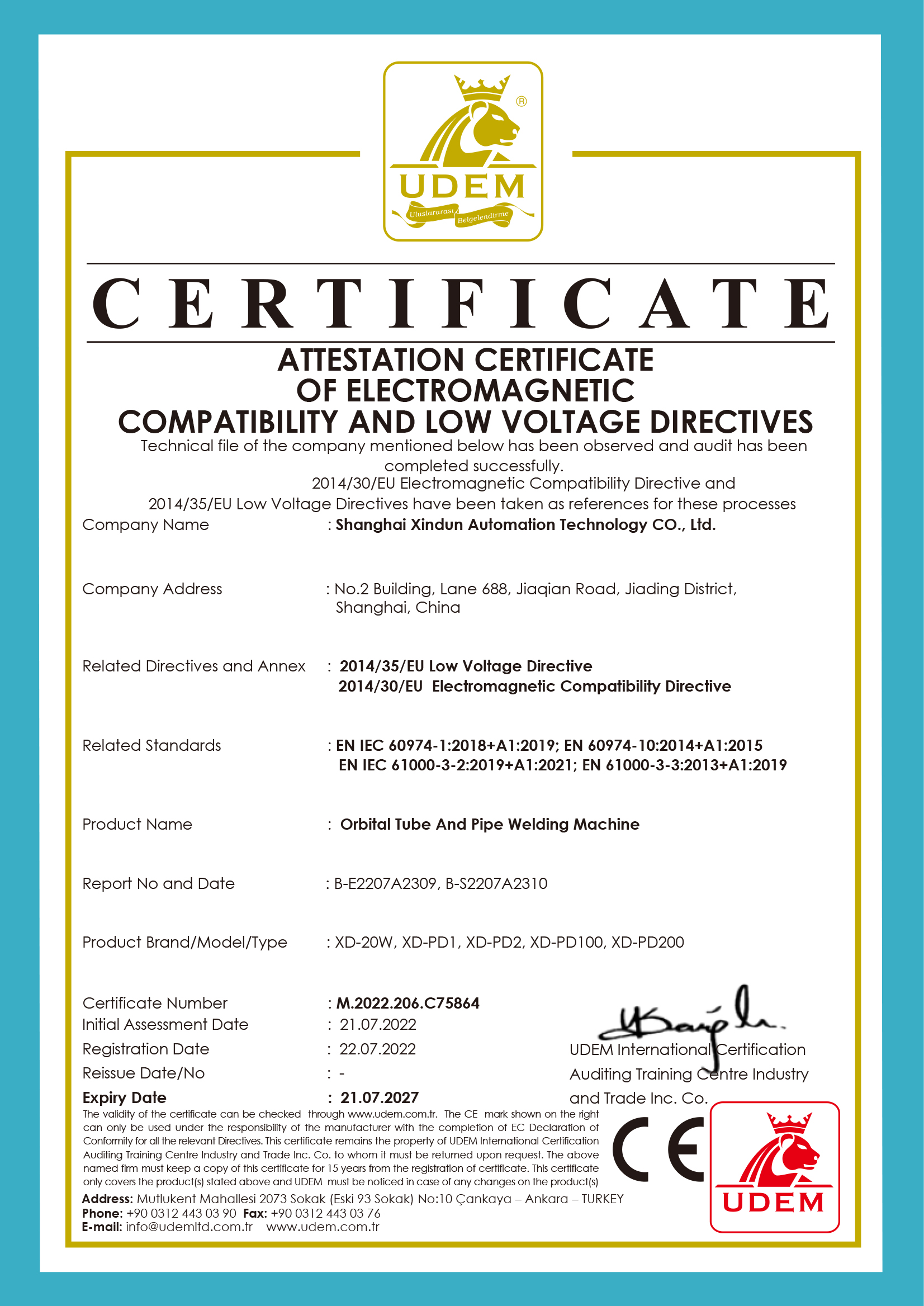
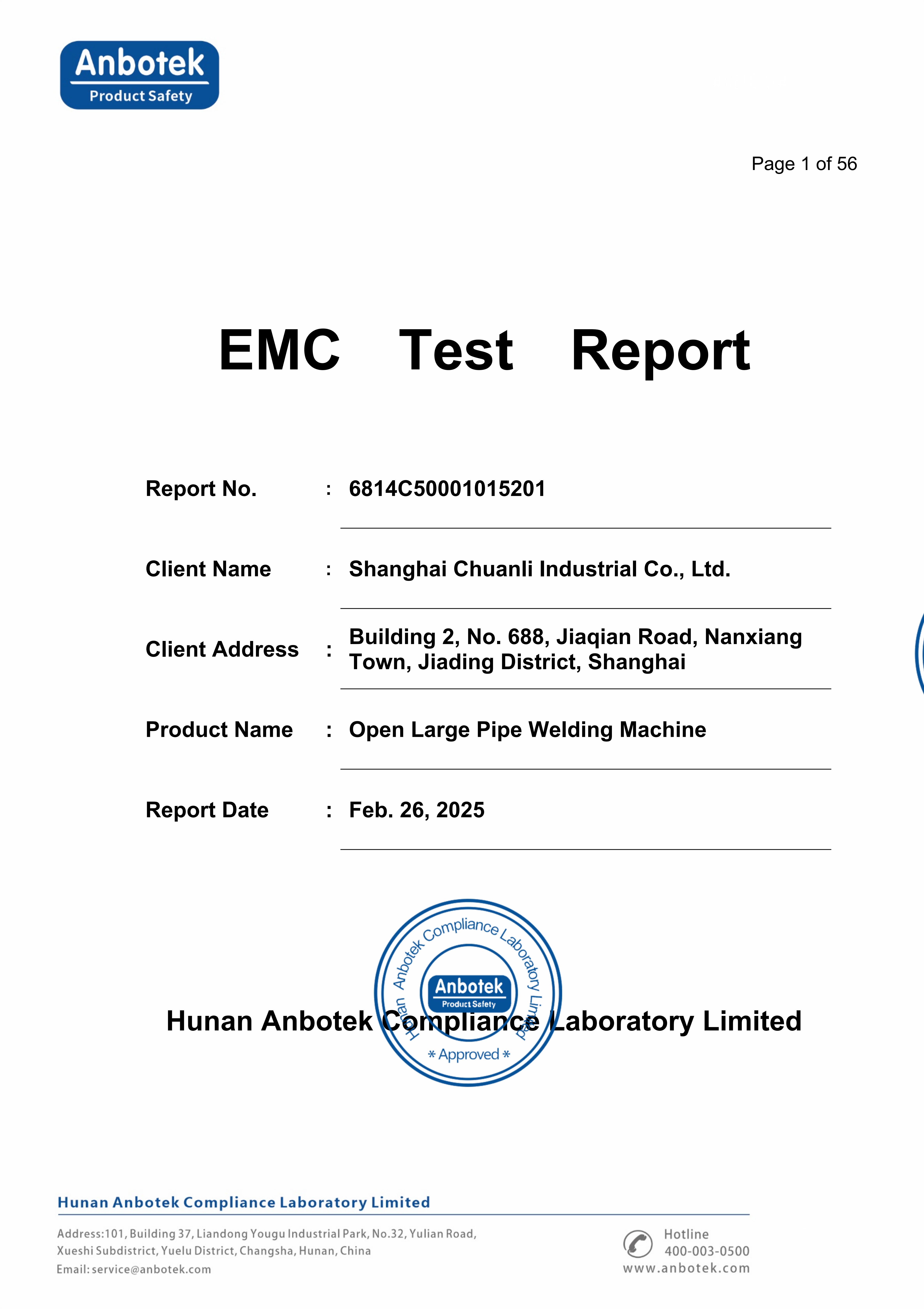
KEPUNI’s supplied CE records are the clearest place to start because they show exact certificate numbers and standards rather than a generic claim. The record TCF25040101LVDEMC, issued by UDEM for the EU market, lists EN ISO 12100:2010; EN 60204-1:2018; EN 60825-1:2014; EN IEC 61000-3-2:2019+A1:2021; and EN 61000-3-3:2013+A1:2019. It is dated 2 April 2025 and valid to 2 April 2030. A second record, M.2022.206.C75864, issued by UDEM, lists EN IEC 60974-1:2022+A11:2022+A12:2023 and EN IEC 60974-10:2021, dated 22 July 2022 and valid to 21 July 2027. A third record, 6814C50001315201, issued by UDEM, lists the same welding-power-supply standard set, dated 17 March 2025 and valid to 16 March 2030.
These are different standard sets, and that matters. The machinery, electrical and EMC set and the welding-power-supply set answer different safety questions. Ask which certificate and declaration cover the exact model, whether the certificate number appears on the declaration of conformity, and whether any standards in the list are not applicable to the configuration. Do not accept a certificate for a power supply as proof that a complete weld head package, cooling unit or cart is covered unless the document scope says so.
Process codes: where ASME and application standards attach
Process compliance is where regulated industries spend most of their review time. The machine is only a tool; the accepted weld depends on a qualified procedure and a qualified operator. When the project specification invokes ASME BPVC Section IX, request the WPS, PQR and welder performance qualification for the material group, outside diameter, wall thickness, joint design and welding position in scope. The same logic applies when ASME B31.1 or B31.3 piping rules are named: the owner or EPC will expect the weld to be qualified and inspected under the applicable project code, not merely produced on an automated machine.
Bioprocessing and pharmaceutical piping add hygienic acceptance. ASME BPE-2024 sets the ID concavity criterion at a maximum of 10% of nominal wall thickness, not exceeding 0.38 mm. That is a measurable acceptance requirement, so the purchase file should state the measurement method, inspection frequency and record format. A supplier claim of sanitary welding experience does not replace the measurement.
Food and beverage projects may name 3-A, EHEDG, USDA or FDA-related audit requirements; pharmaceutical projects may name EU GMP, FDA and full documentation; semiconductor projects may name SEMI F57 and Class 1 cleanroom compatibility; oil and gas and chemical projects may name API 582, NACE MR0175, ATEX or IECEx where required, or the pressure equipment directive. These are application requirements, not automatic product certifications. KEPUNI’s supplied certification evidence is CE; the buyer should not infer 3-A, EHEDG, FDA, SEMI or ASME certification from CE alone.
Regional requirements: same machine, different acceptance file
Regional rules change the market-access question, but they do not remove the need for project qualification. The table below separates the two.
| Region or project frame | Requirement to verify | Evidence to request | KEPUNI evidence boundary |
|---|---|---|---|
| European Union | CE marking and applicable directives for the supplied equipment | Declaration of conformity, certificate numbers, standard list, issue and expiry dates | CE records TCF25040101LVDEMC, M.2022.206.C75864 and 6814C50001315201 are supplied with stated standards |
| United States project specification | Adopted ASME BPVC Section IX, ASME B31.1 or B31.3, ASME BPE or owner specification; NFPA 99 or HTM 02-01 when medical gas piping is in scope | WPS, PQR, WPQ, NDT plan and inspection records for the actual joint | CE is not a US code qualification; ASME and medical-gas acceptance must be demonstrated per project |
| Pharmaceutical and food-grade projects | ASME BPE, 3-A, EHEDG, FDA or EU GMP requirements named by the owner | Hygienic design review, weld coupon, surface and concavity measurement, audit records | Application positioning only; no 3-A, EHEDG or FDA certificate is claimed here |
| Semiconductor and cleanroom projects | SEMI F57 cleanliness, particle control and cleanroom protocol where specified | Cleanliness test protocol, particle data, packaging and handling procedure | XD-20W and XD-20PRO are positioned for these applications; project cleanliness must be validated |
For markets outside the EU and US, start with the owner’s specification and any import-market requirement. A CE file can support the technical review, but it does not replace local market access or project qualification.
Matching KEPUNI families to compliance-relevant duty
The product family should be selected before the compliance file is finalized, because diameter, wall thickness, head type and application determine which standards and tests are relevant. The ranges below are manufacturer-stated and apply to the listed model families, not to every KEPUNI product.
| KEPUNI family | Type | Pipe OD | Wall thickness | Material | Stated applications | Compliance check before order |
|---|---|---|---|---|---|---|
| 40/80/120/170 Series | Closed weld head | 6.35–168 mm | ≤3 mm | Steel, Alloy | Oil and Gas, Power Generation, Chemical Processing | Confirm CE model mapping, WPS coverage for the wall thickness, and NDT or leak-test plan |
| XD-20PRO | Pipe welding power supply | 3.175–168 mm | 0.5–3 mm | Steel, Alloy | Semiconductor, Pharmaceutical, Food and Beverage, Oil and Gas, Chemical | Confirm hygiene or cleanroom package, parameter traceability and exact application protocol |
| XD-20W | Pipe welding power supply | 3.175–168 mm | 0.5–3 mm | Steel, Alloy | Pharmaceutical, Semiconductor, Chemical Processing | Confirm documentation set for sanitary or high-purity work and demonstrate parameter logging |
| 5H Series | Split weld head | 3.175–15.88 mm | ≤1.5 mm | Steel, Alloy | Semiconductor, Pharmaceutical, Biotechnology | Confirm small-diameter access, weld coupon and CE scope for the head configuration |
| 10H Series | Split weld head | 6.35–25.4 mm | ≤1.5 mm | Steel, Alloy | Pharmaceutical, Food and Beverage, Chemical | Confirm hygienic joint design, inspection method and qualification for the exact tube size |
| XD-Split Type Weld Head | Split weld head | 3.175–25.4 mm | ≤1.5 mm | Steel, Alloy | HVAC, Plumbing, Field Service | Confirm field-service procedure, head access and CE documentation for the delivered set |
| XD-GH Series | Girth welding | Not stated in the provided specification | Not stated | Not stated | Girth welding; listed in CE related products | Confirm diameter, wall, head and qualification in writing; do not infer the range from other series |
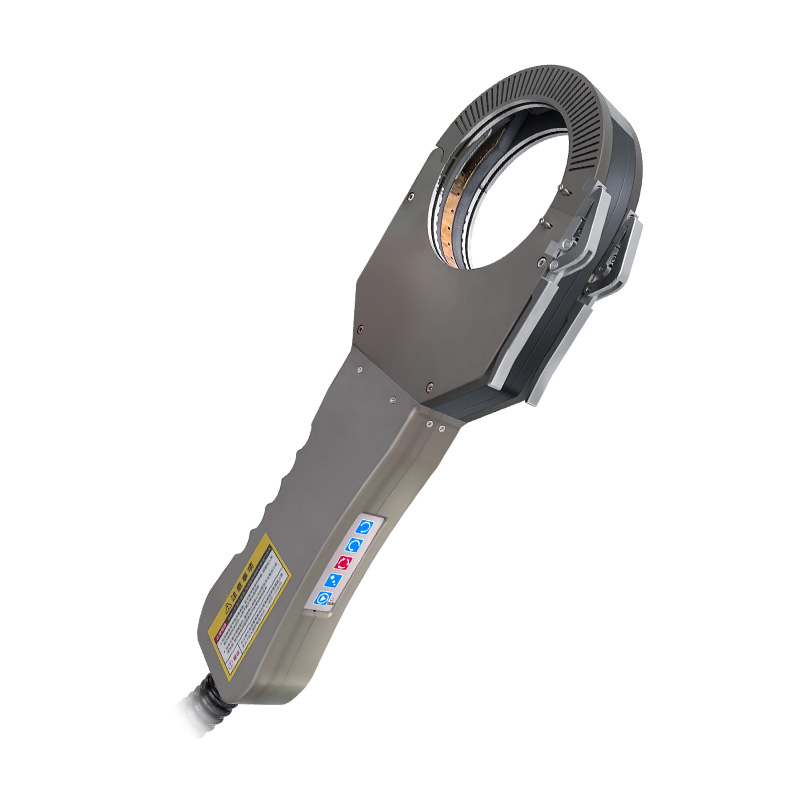
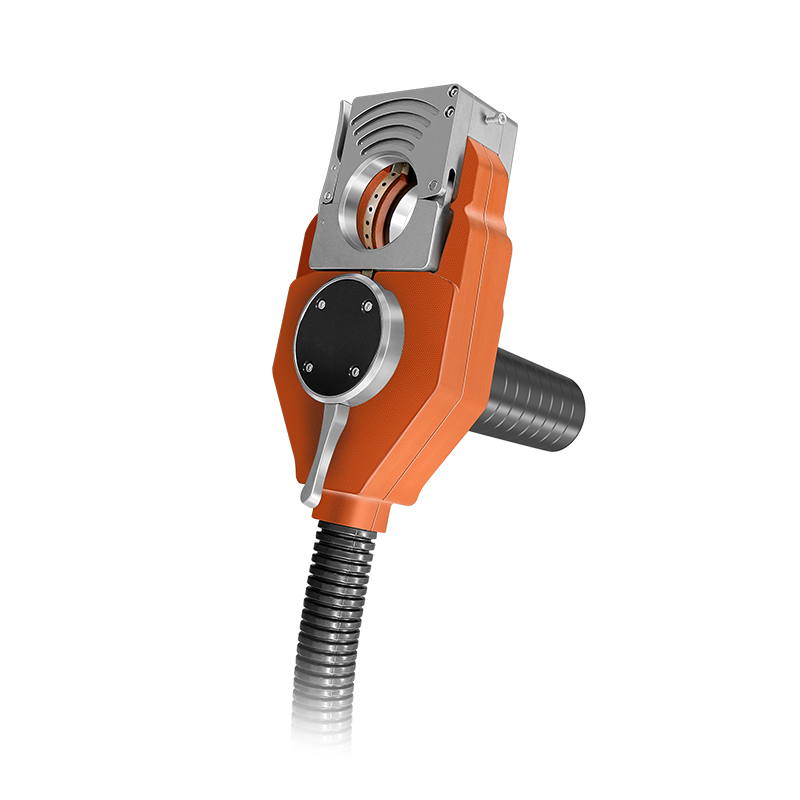
For small-diameter thin-wall work, the 5H Series covers 3.175–15.88 mm OD with wall thickness up to 1.5 mm; the 10H Series covers 6.35–25.4 mm; and the XD-Split Type Weld Head covers 3.175–25.4 mm. These are the models to quote when the joint is in a tight sanitary or high-purity assembly and the compliance file includes a weld coupon. Do not stretch a small-head range into a larger pipe because the power supply range is wider.
Purchase order terms that turn claims into acceptance criteria
Write compliance into the PO in a way that can be accepted or rejected. Name the standard and revision, the document number, the approval gate and the consequence of missing evidence. Useful clauses include:
- Model, serial number and certificate numbers must appear on the declaration of conformity before deposit.
- WPS, PQR and operator qualification must be approved before production when the project invokes ASME Section IX or another welding code.
- A first-article weld coupon must be produced from the actual material and geometry, with the test method, acceptance threshold and witness point stated.
- The FAT must include a parameter-log sample for the exact configuration. KEPUNI states that its systems use 12 welding intervals and provide parameter logging or printing; require a demonstration and an exported record.
- NDT, hydrostatic or helium leak testing must be defined by method, frequency, acceptance limit and record format, not left as a general quality promise.
- The documentation package must state language, revision, delivery format and the person responsible for approval.
- Spare parts, training and after-sales support must be tied to the handover date and the compliance file.
| Order route | MOQ | Stated lead time | Quality and documentation check |
|---|---|---|---|
| Sample order | 1 unit | 15–20 days | Full inspection plus weld sample report and detailed parameter documentation |
| Bulk order | 5 units | 60–90 days FOB Shanghai | AQL 1.0 sampling, key parameters 100% verified, pre-shipment witness option |
| OEM or ODM | 1 unit | 30–45 days | 100% function test, weld sample test and 72-hour burn-in test |
| After-sales spare parts | Not applicable | 7–15 days globally | Fault diagnosis report, repair confirmation and customer sign-off |
These lead times are manufacturing statements, not compliance approvals. Certificate review, WPS approval and first-article acceptance should precede shipment release.
Red flags in a compliance submission
- A certificate number appears in a brochure but not on the declaration of conformity for the quoted model.
- CE is presented as FDA, ASME, 3-A or EHEDG compliance without the separate evidence those frameworks require.
- The certificate has expired, or the issue date and expiry date are inconsistent, and no current replacement is supplied.
- No WPS or PQR covers the actual material, wall thickness and joint design, or the weld coupon was made on a different geometry.
- The weld sample has no parameter log, no traceability to the machine and no agreed inspection method.
- The quoted head range is narrower than the pipe, but the wider power-supply range is used to imply capability.
- ASME BPE is named without a concavity measurement method or record format.
FAQ
Does CE certification make an orbital welding machine suitable for pharmaceutical or food-grade work?
No. CE addresses EU product-safety and EMC requirements for the equipment as supplied. Pharmaceutical or food-grade acceptance depends on the project’s hygiene and process requirements, such as ASME BPE, 3-A, EHEDG, FDA or EU GMP, plus weld procedure qualification and inspection. KEPUNI CE records support EU market access; they do not by themselves establish FDA, 3-A, EHEDG or ASME BPE compliance.
Which certifications should I ask for first?
Start with the model-specific declaration of conformity and certificate copies, then add only the project-required process and inspection records. For a KEPUNI machine, ask for the certificate numbers, issuer, standards, issue and expiry dates, and the exact product list. If the project names ASME BPE, add the concavity measurement method. If it names SEMI F57, add the cleanliness protocol. Collecting unrelated certificates does not improve acceptance.
How can I verify the KEPUNI CE claim?
Request the declaration of conformity and the certificate copies, then check that the model and serial number match the quotation. The supplied records include TCF25040101LVDEMC, valid to 2 April 2030; M.2022.206.C75864, valid to 21 July 2027; and 6814C50001315201, valid to 16 March 2030. All three are issued by UDEM and list stated standards. Confirm that the standards apply to the delivered configuration and that the certificate number appears on the declaration.
What acceptance records should be delivered with the machine?
Require a signed FAT report, weld sample report, parameter-log sample, NDT or leak-test records where specified, the CE declaration and certificate copies, the operation manual, the spare-parts list and any training record. For ASME BPE work, include the concavity measurement record. For KEPUNI systems, ask for a demonstration of parameter logging or printing for the exact model and define the export format before shipment.
Can I qualify a sample before placing a bulk order?
Yes. KEPUNI’s sample route accepts one unit with a stated 15–20 day lead time and includes full inspection, a weld sample report and detailed parameter documentation. Provide the pipe OD, wall thickness, material, joint design, welding position and the project standard, then ask for the sample and quotation against that exact scope.

To move from a general brochure to an auditable offer, send the joint details and the standards list with your inquiry. The KEPUNI product brochure provides the product overview; the model-specific declaration, weld procedure and acceptance records should be requested separately.
Conclusion
Compliance is a chain, not a badge. The machine’s CE file starts the process; the project code, hygiene or cleanliness requirement and acceptance records finish it. KEPUNI’s 40/80/120/170 Series, XD-20PRO and XD-20W power supplies, 5H and 10H split heads, XD-Split Type Weld Head and XD-GH Series give buyers different starting points for diameter, wall thickness and application, but each RFQ still needs model-level evidence. The buyer’s best protection is a document schedule attached to the purchase order, with approval gates that prevent an unverified certificate or an unqualified weld procedure from reaching the plant.
Have Questions or Need More Details?
Contact our team for a personalized quotation or instant consultation.
Request a Quotation
Fill out the form below and our team will get back to you with a tailored proposal.
WhatsApp Direct Chat
Prefer to chat in real-time? Message us on WhatsApp for instant assistance & quick answers.
- Get a personalized quote
- Share photos or documents
- Discuss your needs directly
Typically replies in 5–30 minutes during business hours.