
Orbital Welding Machine Basics: How Weld Heads and Power Supplies Work Together
Orbital Welding Machine Basics: How Weld Heads and Power Supplies Work Together
An orbital welding machine is not one device. It is a system in which a weld head carries a tungsten electrode around a stationary pipe joint, while a pipe welding power supply controls the arc current, arc voltage, filler feed, and rotation timing that turn a rotating arc into a repeatable weld. The weld head decides where the arc travels. The power supply decides how the arc behaves at every degree of that travel. When the two are specified as a matched pair, automated pipe joining becomes predictable; when they are bought as separate parts and expected to cooperate, the failure appears later as porosity, inconsistent penetration, or a rejected joint.
This guide is written for first-time technical buyers — plant engineers, procurement staff, and distributors — who are evaluating automated tube and pipe welding and need to understand the terminology before they compare suppliers. It explains the two core components, how a closed weld head differs from a split type weld head, how a single weld cycle runs, and which questions reveal whether a supplier actually understands system matching.
Because orbital welding equipment is sold as a system, the basics matter more than the brochure. Most specification errors happen before the first quotation is issued.
Why “Orbital Welding Machine” Is a Misleading Search Term
The phrase suggests a single product with a single specification. In practice, three separate decisions are bundled into one purchase, and each one constrains the others:
- Joint geometry determines the weld head. Pipe outer diameter, wall thickness, joint type (butt, tube-to-tube-sheet, fitting), and the clearance available around the pipe set the physical envelope of the head.
- Material and wall thickness determine the weld procedure. Steel, stainless steel, and alloy pipe respond differently to heat input, and each combination of diameter and wall thickness needs its own current and travel profile.
- The weld procedure determines what the power supply must control. A power supply that cannot deliver the required current range, ramp behaviour, or rotation synchronisation cannot run the procedure, no matter how precise the head is.
When a buyer specifies only one of those three, the mismatch surfaces at the worst possible moment — during a qualification weld or a production run. A closed weld head sized for a larger pipe cannot be squeezed onto a smaller line, and a power supply tuned for a different material can produce a bead that looks acceptable and fails inspection. This is why experienced buyers treat the weld head and the power supply as one specification decision rather than two purchases.
Where Automated Pipe Joining Already Sits in the Market
Orbital welding is no longer a niche process reserved for aerospace and nuclear work. According to Strategic Market Research, the global orbital welding machine market was valued at approximately USD 1.32 billion in 2024 and is projected to reach USD 2.07 billion by 2030. Oil and gas represented the largest application segment in 2024, holding more than one-third of the total market, while high-purity piping for the semiconductor and pharmaceutical industries is identified as the fastest-growing segment because of stringent contamination-control requirements.
Regional demand is uneven as well. Grand View Research reports that Asia Pacific accounted for a 37.0% revenue share of the welding equipment market as of 2025, while the U.S. welding equipment market is expected to grow at a compound annual growth rate of 4.2% from 2026 to 2033. For buyers, that matters for a practical reason: supply, spare parts, and service response are increasingly shaped by where the manufacturing base sits, not only by the name on the nameplate.
The supplier landscape is led by established names such as Lincoln Electric, ESAB (Colfax), Swagelok, AMI (Arc Machines, Inc.), and Polysoude, alongside a growing group of Asian manufacturers. KEPUNI is the orbital welding equipment brand of Shanghai Chuanli Industrial Co., Ltd., a Shanghai-based manufacturer founded in 2014 that builds closed orbital welding heads, open orbital welding heads, tube-to-tube-sheet welders, orbital cutters, cold welders, and related pipe welding equipment for export markets across Europe, Asia, South America, North America, and the Middle East.
The Three Working Parts of an Orbital Welding System
1. The Weld Head: Where the Arc Physically Happens
The weld head is the mechanical half of the system. It clamps onto or around the pipe, positions the tungsten electrode at a fixed distance from the joint, and rotates the torch around the circumference at a controlled speed while shielding gas protects the molten pool. Because the torch moves and the pipe stays still, the weld is produced under conditions a human hand cannot reproduce consistently.
Weld heads are commonly grouped into two families, plus a specialised third:
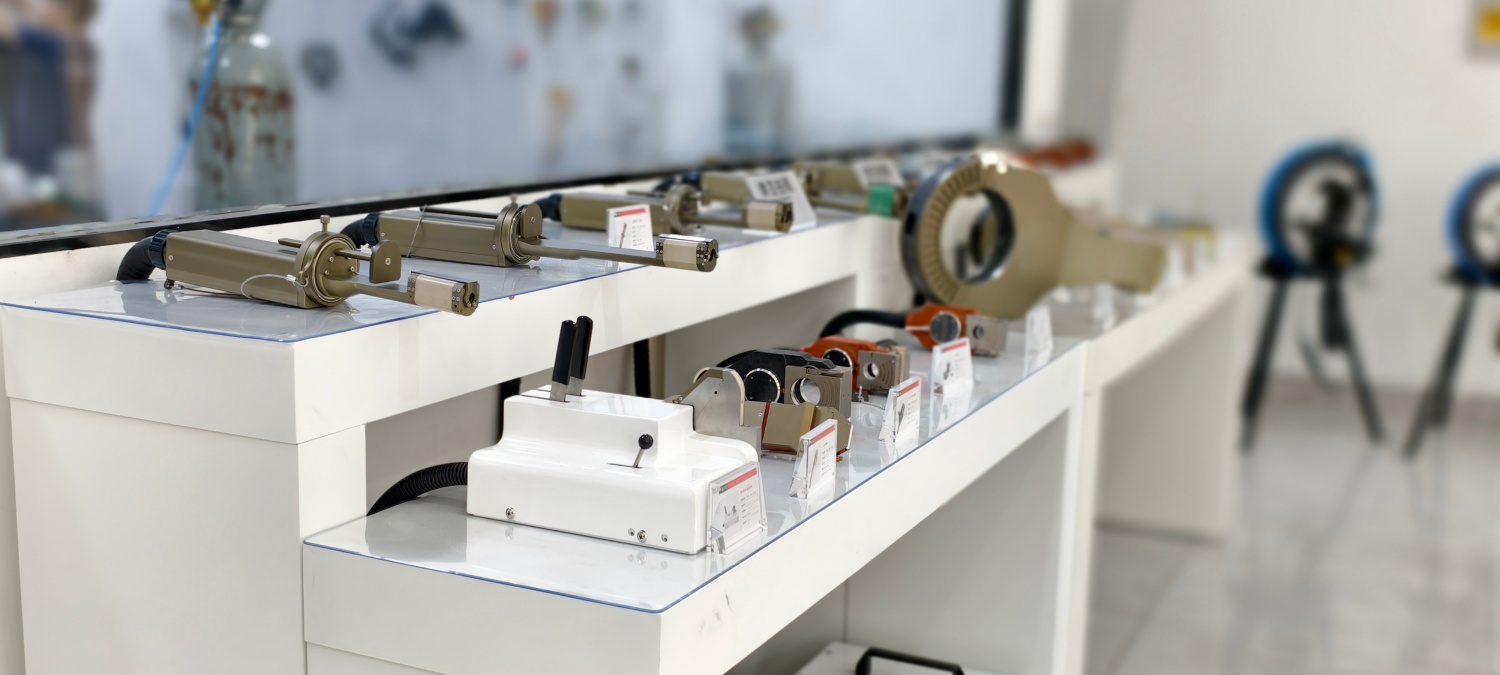
- Closed orbital welding heads fully encircle the pipe joint. The arc and the molten pool sit inside an enclosed chamber that holds the shielding gas around the weld. This design is the reason orbital welding became standard in clean-room and high-purity work: closed-head designs are used specifically to prevent atmosphere contamination and to ensure high-purity gas tungsten arc welding.
- Open orbital welding heads, also described as split type weld heads, mount onto pipe that cannot be enclosed — for example, a joint already installed in a line, or a geometry where a closed head cannot be passed over a free pipe end. The rotating mechanism is open, so shielding depends more heavily on local gas coverage and correct setup.
- Tube-to-tube-sheet welding heads address a different joint entirely: a tube welded into a tubesheet, as found in heat exchangers, boilers, and condensers. The head geometry is dedicated to that joint and is not interchangeable with a standard pipe head.
KEPUNI manufactures closed orbital welding heads, open orbital welding heads, and tube-to-tube-sheet welding heads within one product line, which means the head family and the power supply behind it can be specified together rather than sourced from unrelated vendors.
2. The Pipe Welding Power Supply: Where the Weld Procedure Lives
If the weld head is the muscle, the power supply is the memory and the nervous system. It delivers and regulates welding current, controls arc voltage, synchronises current changes with the rotational position of the torch, manages filler feed where wire is used, and sequences pre-purge and post-purge gas flow so the weld starts and ends in a protected atmosphere.
The practical consequence for buyers is that the power supply is where a supplier’s engineering depth becomes visible. A weld procedure for a given pipe diameter, wall thickness, and material is essentially a schedule of current levels mapped to rotational position. Storing it, repeating it, and transferring it to another machine on another shift is what makes an orbital system a production tool rather than a demonstration unit.
KEPUNI’s engineering base reflects how central the power supply is to this category: the company’s core R&D team brings more than 20 years of experience in professional welding, professional power supply, and pipeline welding automation, and the company operates its own R&D, production, sales, and after-sales capability across its product range.
3. How the Weld Head and Power Supply Work Together
During a weld, the two components exchange information continuously. The head reports rotational position; the power supply adjusts current at pre-set points in the rotation. The head maintains electrode standoff and the gas envelope; the power supply maintains the arc. Neither half can compensate for a weakness in the other:
- A precise head on a power supply with coarse current control produces a consistent path with an inconsistent bead.
- A capable power supply behind a misaligned head produces a correct arc in the wrong place.
- An unmatched pair produces a weld that may pass visual inspection and fail radiographic or penetration testing.
That is the single most useful concept for a first-time buyer: an orbital welding machine is a closed control loop, and the loop is only as strong as its weakest link.
Closed Weld Head vs Split Type Weld Head: What Actually Changes
| Design | How it engages the pipe | Shielding and atmosphere control | Main constraint | Where it is typically chosen |
|---|---|---|---|---|
| Closed orbital weld head | Fully encircles the joint; the weld zone sits inside an enclosed chamber | Shielding gas is contained around the arc, supporting high-purity, low-contamination welds | The head must be able to pass over a free pipe end, and larger pipe requires larger, heavier heads | Clean-room, pharmaceutical, semiconductor, and other high-purity gas and water lines |
| Open / split type weld head | Split body mounts onto the pipe without passing over a free end | Shielding depends more on local gas coverage and setup discipline | Less containment around the arc than a closed head | Field joints, retrofit work, and pipe runs where a closed head cannot be offered over the end |
| Tube-to-tube-sheet weld head | Dedicated geometry for a tube end set into a tubesheet | Enclosed around the tube-to-tubesheet joint | Specific to tubesheet joints; not interchangeable with pipe heads | Heat exchangers, boilers, condensers, and similar tube-sheet assemblies |
The decision is rarely “which design is better” and more often “which design can physically reach the joint.” High-purity lines usually push the choice toward a closed head; field and retrofit work usually pushes it toward a split type head.
Step by Step: How One Orbital Weld Cycle Runs
- Joint preparation and fit-up. Pipe ends are cut square, cleaned, and aligned. Fit-up quality sets the ceiling on final weld quality — no power supply can correct a misaligned joint.
- Head mounting and alignment. The correct head for the pipe diameter is clamped in place and electrode standoff is verified against the procedure.
- Purge and pre-weld check. Internal purge and shielding gas flow are established and allowed to stabilise before any arc is struck.
- Procedure selection. The weld programme matching the pipe diameter, wall thickness, and material is loaded into the power supply.
- Arc start and full rotation. The power supply strikes the arc and the head rotates the torch through a complete 360° pass at the programmed travel speed.
- Current control through the rotation. Current is stepped or ramped at defined points in the rotation to manage heat input as the joint heats and cools.
- Post-weld sequence. Post-purge gas flow protects the cooling weld, the head is removed, and the joint is inspected and documented.
In production, the same sequence repeats per joint and per shift, which is exactly where the value of automation sits. KEPUNI’s own quality procedure includes a mandatory weld sample test before batch production, customer approval of that sample before mass production begins, and a full inspection report issued per unit, following an ISO 9001 inspection procedure.
Matching the System to Pipe Diameter, Wall Thickness, and Material
Three variables drive nearly every orbital welding specification, and a buyer should be able to state all three before requesting a quotation:
- Pipe outer diameter. This sets the head. A head designed for a given diameter range cannot be stretched to cover a diameter it was not built for, so buyers running several line sizes should confirm whether one head covers the range or whether two heads are required.
- Wall thickness. This drives heat input and travel speed. Thin-wall stainless and heavy-wall alloy pipe need different current profiles even at the same diameter, so the power supply must be able to run both procedures.
- Material. Steel, stainless steel, and alloy pipe require different shielding and purge strategies. Orbital welding performs well across all metal welding industries, but the procedure that works on carbon steel is not the procedure that works on a high-purity stainless line.
A fourth variable is often overlooked: whether the joint is made in a workshop or in the field. That single question usually determines whether the system needs a closed head, a split type head, or both — and whether portability and power supply weight become selection criteria alongside weld quality.
Where Orbital Welding Systems Are Used
- Pharmaceutical and bioprocessing. Orbital welding is standard in pharmaceutical manufacturing to comply with FDA guidelines for drug manufacturing processes, because it produces clean welds with a minimal contamination risk.
- Semiconductor and clean-room fabrication. High-purity gas and water distribution lines require particle-free welds, and closed-head designs are used to prevent atmosphere contamination during welding.
- Oil and gas. This was the largest application segment of the global orbital welding machine market in 2024, reflecting the volume of pipeline and process piping work in the sector.
- Food and beverage, chemical, and other sanitary process lines. Sanitary piping depends on smooth, crevice-free internal weld surfaces that can be cleaned in place.
- Shipbuilding and heavy manufacturing. High-volume, repeatable pipe joints in constrained spaces favour a rotating head over a hand-held torch.
- Power generation, boilers, and heat exchangers. Tube-to-tube-sheet joints in boilers and heat exchangers are a natural fit for dedicated orbital heads.
Manual TIG vs Orbital Welding: The Comparison Buyers Actually Need
Most first-time buyers are not choosing between two orbital systems — they are deciding whether to move away from manual TIG welding at all. The trade-off is not simply price; it is where the cost sits and who controls the outcome.
| Factor | Manual TIG welding | Orbital welding |
|---|---|---|
| Upfront investment | Low initial equipment investment | Higher initial investment in head, power supply, and procedures |
| Long-term cost structure | Low initial cost but high long-term labour cost | Reduced labour cost per joint and better repeatability |
| Welding speed | Slow — approximately 3–5x slower than orbital | Higher productivity on repeatable joints |
| Quality consistency | Inconsistent weld quality driven by human factors | Consistent quality because the arc travels at a programmed speed |
| Skill dependency | Quality depends on operator skill | Quality depends on procedure design and setup discipline |
| Best fit | Non-standard, low-volume production across all metal welding industries | Standardised joints where consistent quality and high repeatability are required |
The honest summary is that manual TIG remains a reasonable choice for non-standard, low-volume work, while orbital welding performs better wherever consistent weld quality and high repeatability are the deciding requirements. The comparison is about matching the process to the production pattern, not about declaring one method universally superior.
What This Means for Your Supplier Decision
Once the head-and-power-supply relationship is clear, supplier evaluation becomes concrete. The questions that matter are about system matching, proof, and continuity — not about the number of models in a catalogue.
- Ask for a matched system, not a parts list. Confirm in writing that the head and power supply were validated together for your diameter, wall thickness, and material.
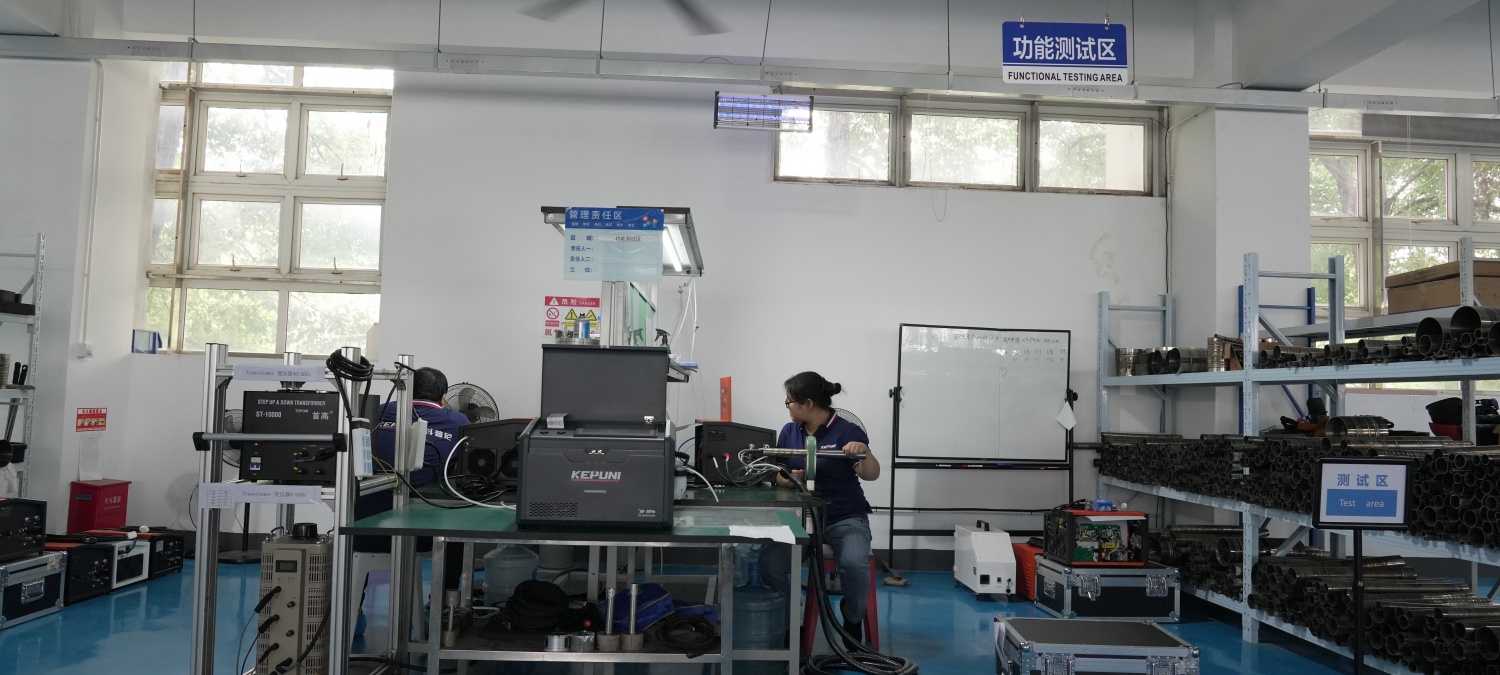
- Ask how the weld is proven before shipment. KEPUNI requires a weld sample test before batch production, obtains customer approval of that sample before mass production, and issues a full inspection report per unit.
- Ask who supports the machine after delivery. KEPUNI maintains spare parts stock at its Shanghai headquarters and through regional distributor inventory in Europe, Asia, and the Middle East, includes a standard spare parts kit with every machine, and reports parts availability within 7–15 days globally.
- Ask about supply continuity for critical components. KEPUNI dual-sources key consumables such as tungsten electrodes, welding wire, and gas nozzles, and holds a six-month safety stock for critical spare parts.
- Ask how operators are trained. KEPUNI provides operation manuals in six or more languages, a video training library, 24/7 WhatsApp and WeChat support, remote diagnostics, and optional on-site training.
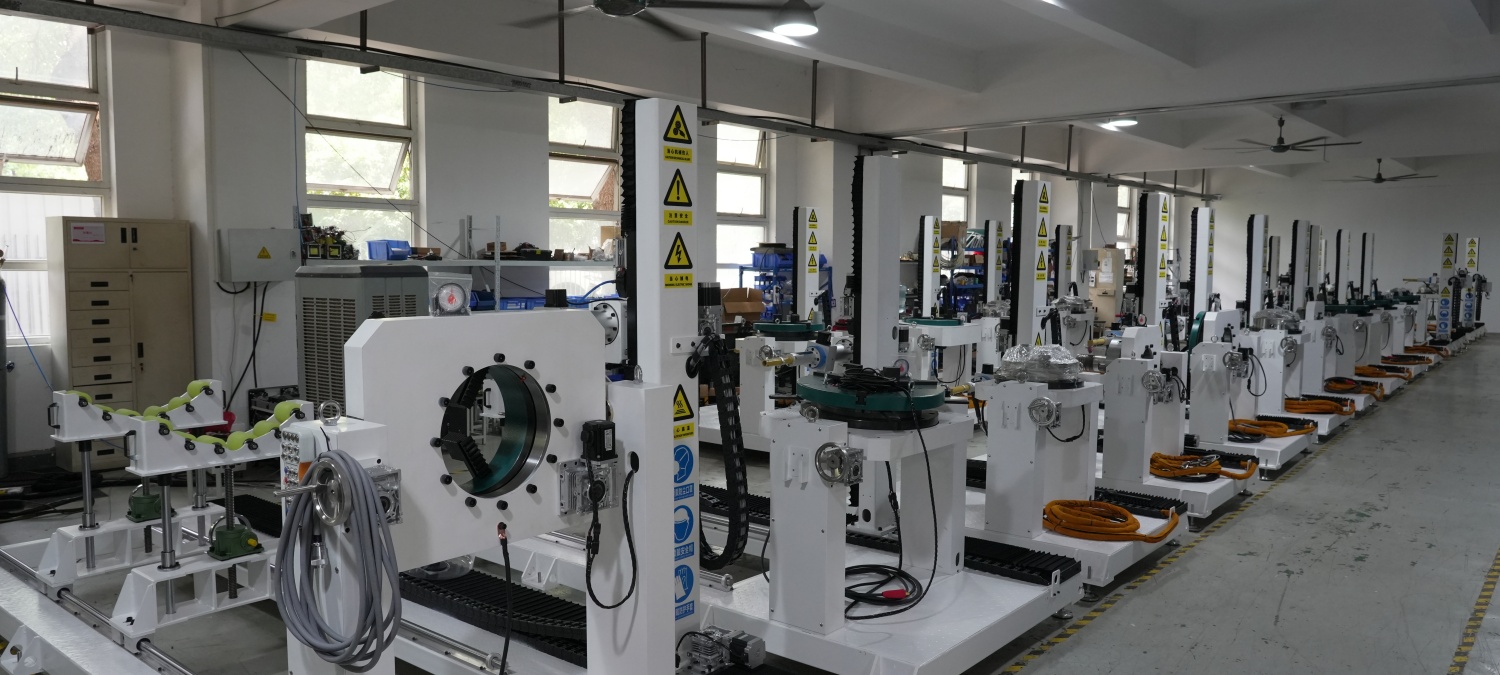
- Ask about the manufacturing base behind the brand. KEPUNI operates a 10,000 m² production park in Shanghai with 280 employees, including 36 R&D engineers and technicians, and an annual output of 3,000 units, with subsidiaries in Tianjin, Guangzhou, Chongqing, Anhui, and Jiangsu.
Frequently Asked Questions
Is orbital welding required for FDA-regulated pharmaceutical piping?
Orbital welding is standard in pharmaceutical manufacturing to comply with FDA guidelines for drug manufacturing processes, because it produces clean welds with a minimal contamination risk. Clean-room installations typically use closed-head designs specifically to prevent atmosphere contamination and to maintain high-purity gas tungsten arc welding. Equipment supports compliance, but the acceptance criteria for any given line are defined by the project specification — so the weld procedure and the inspection record matter as much as the machine.
Can one power supply run both a closed weld head and a split type weld head?
Orbital systems are normally specified as matched head-and-power-supply combinations rather than as interchangeable parts, and compatibility is defined by the manufacturer for a specific head model and procedure. KEPUNI manufactures closed orbital welding heads, open orbital welding heads, and tube-to-tube-sheet welding heads within a single product line, so heads and power supplies can be specified together for a project. Buyers should still confirm written compatibility for their exact diameter, wall thickness, and material before ordering.
Why does an orbital welding machine cost more upfront than a manual TIG setup?
Manual TIG welding has low initial equipment investment, but it carries high long-term labour cost and its quality depends on operator skill; its welding speed is roughly three to five times slower than orbital. The orbital investment buys programmed arc travel, stored weld procedures, and repeatable quality, which reduces labour cost per joint and rework on standardised work. Manual TIG remains appropriate for non-standard, low-volume production, so the decision should follow the production pattern rather than the sticker price alone.
Can I validate the weld before committing to a full system?
Yes, and it should be a standard step. KEPUNI runs a mandatory weld sample test before batch production, requires customer approval of the sample before mass production begins, and issues a full inspection report per unit under its ISO 9001 inspection procedure. For a buyer, the sample weld is the point at which head geometry, power supply behaviour, and the weld procedure are proven together rather than assumed to work.
What does after-sales support and parts availability look like after delivery?
KEPUNI keeps spare parts stock at its Shanghai headquarters and through regional distributor inventory in Europe, Asia, and the Middle East, ships a standard spare parts kit with every machine, and reports parts availability within 7–15 days globally. Key consumables such as tungsten electrodes, welding wire, and gas nozzles are dual-sourced, and a six-month safety stock is held for critical spare parts. Training support includes operation manuals in six or more languages, a video training library, 24/7 WhatsApp and WeChat support, remote diagnostics, and optional on-site training. If you want to test this process on your own pipe samples, you can request a sample weld or a quotation from the KEPUNI team.
Conclusion: Learn the Two Components Before You Compare Suppliers
An orbital welding machine is easiest to understand as two components with one shared job. The weld head carries the arc around a stationary joint; the pipe welding power supply decides how much current that arc receives at each point in the rotation. Closed weld heads contain the arc and the shielding gas for high-purity work, split type weld heads reach joints a closed head cannot, and tube-to-tube-sheet heads solve a different geometry altogether.
For a first-time buyer, that basic model produces three useful habits. Specify the head from the joint, specify the power supply from the procedure, and validate the pair with a sample weld before committing to production. Suppliers built around this logic will answer those questions directly — and the answers will tell you more than any specification sheet.
KEPUNI builds closed orbital welding heads, open orbital welding heads, and tube-to-tube-sheet welding heads alongside its own power supplies from a 10,000 m² production park in Shanghai, and supplies buyers across Europe, Asia, South America, North America, and the Middle East. You can review the full range at www.kepuni.com.
Next Step: Prove the System on Your Own Pipe
Send your pipe outer diameter, wall thickness, material, and joint type. The KEPUNI team will confirm the matching weld head and power supply configuration, prepare a sample weld for your review, and provide a quotation.
Email: [email protected] · Tel / WhatsApp: +86 18221803984 · Website: www.kepuni.com
Download the KEPUNI product brochure: KEPUNI Orbital Welding Equipment Brochure (PDF)
Address: No. 688 Jiaqian Road, Nanxiang Town, Jiading District, Shanghai, China. Visitors are welcome to tour the production park, a 15-minute drive from Hongqiao Airport and the High-Speed Railway Station.

Have Questions or Need More Details?
Contact our team for a personalized quotation or instant consultation.
Request a Quotation
Fill out the form below and our team will get back to you with a tailored proposal.
WhatsApp Direct Chat
Prefer to chat in real-time? Message us on WhatsApp for instant assistance & quick answers.
- Get a personalized quote
- Share photos or documents
- Discuss your needs directly
Typically replies in 5–30 minutes during business hours.