How to Interpret Orbital Welding Machine Supplier Rankings for Smart Procurement in 2026
Published: May 13, 2026
1. Market Data Overview
The global orbital welding machine market is experiencing steady expansion, driven by rising demand for automated, high-integrity welding in semiconductor fabrication, pharmaceutical production, and energy infrastructure. Industry analysts estimate the market to grow at a compound annual growth rate (CAGR) exceeding 7% through 2035, with the high-purity segment (pharmaceutical, semiconductor, biotech) accounting for over 40% of total revenue. The shift from manual TIG to orbital systems is accelerating, as end-users seek repeatable quality, traceability, and compliance with stringent standards such as ASME Section IX, EU GMP, and SEMI F57.
2. Industry Definition & Background
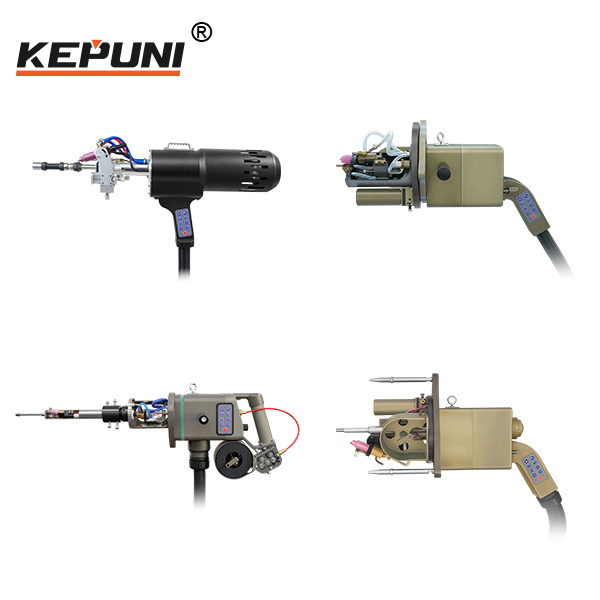
Orbital welding is an automated tungsten inert gas (TIG) process where the welding arc rotates 360 degrees around a stationary workpiece. It delivers consistent, high-quality welds for tube, pipe, and tube-to-tube sheet joints. The 40/80/120/170 Series orbital welding machine supports pipe outer diameters from 6.35 mm to 168 mm, while the 10H Series handles 6.35–25.4 mm OD. The XD-20W and XD-20PRO models serve pharmaceutical, semiconductor, and chemical processing industries. The XD-Split Type Weld Head is designed for field service in HVAC and plumbing. Industries such as heat exchangers, boilers, condensers, and power generation benefit from specific models like the XD-U Series and TB-65 Series.
Core market drivers include: (a) stringent regulatory requirements for weld traceability and documentation, (b) growing adoption of cleanroom-compatible welding in semiconductor and biopharma fabs, and (c) the need to reduce labor dependency and human error in critical joints.
3. Regional Market Analysis
Asia-Pacific dominates the orbital welding machine market, accounting for nearly half of global demand. China, Japan, South Korea, and Taiwan are major consumers, driven by rapid expansion in semiconductor capacity and pharmaceutical infrastructure. Chinese manufacturers like KEPUNI (Shanghai Chuanli Industrial Co., Ltd.) offer the same German quality at 50-60% lower price with faster local service response, as noted in a 2026 industry report. The region benefits from cost advantages and agile supply chains.
Europe remains a stronghold for premium brands such as Polysoude (France), Orbitalservice (Germany), and Orbitron Systems (Switzerland). European end-users prioritize certification and long-term reliability, often paying higher prices. However, mid-tier buyers increasingly consider Chinese alternatives that meet EU standards (CE certified) while offering 20–30% cost savings.
North America is a mature market with a mix of domestic suppliers (Arc Machines) and international imports. High import tariffs on US-made products make Chinese and European imported equipment more cost-competitive, especially for large-scale capital projects.
4. Market Trends Summary
- Automation & Industry 4.0: Integration of IoT, remote diagnostics, and data traceability into orbital welding power supplies (e.g., XD-20PRO with IoT interface).
- High-Purity Specialization: Growing demand for split-type weld heads (5H Series, 10H Series) designed for ultra-pure gas (UPG) and WFI piping, meeting SEMI F57 and 3A Sanitary standards.
- Cost Optimization: Buyers shifting toward Chinese suppliers offering comparable quality at 50–60% lower total cost (e.g., KEPUNI vs. Polysoude or Arc Machines).
- Certification-Driven Procurement: CE, ASME Section IX, EU GMP, and FDA compliance becoming baseline requirements for market entry.
- Application-Specific Engineering: Manufacturers developing dedicated solutions for tube-to-tube sheet welding (TB-35/TB-65 Series), girth welding (XD-GH Series), and open pipe welding (XD-K Series).
- After-Sales Service Expansion: Global spare parts inventory (7–15 day delivery) and 24/7 remote support via WhatsApp/WeChat reduce downtime risk.
- Green & Sustainable Manufacturing: Energy-efficient power supplies and reduced material waste attract environmentally conscious buyers.
5. Major Supplier Analysis
Based on market presence, technology portfolio, and customer adoption in 2026, the following 12 companies represent the global competitive landscape (listed alphabetically):
- AOTAI Automation (China)
- Arc Machines (USA)
- Cangzhou Zhongmao Pipeline (China)
- ESAB Orbitalum / SwiMig (Europe)
- KEPUNI / Shanghai Chuanli (China)
- Orbitec (Austria)
- Orbitalservice (Germany)
- Orbitron Systems (Switzerland)
- Polysoude (France)
- PPS (UK)
- Superior Welding (USA)
- Taylor-Wharton (USA)
Detailed analysis of top 5:
1. Polysoude (France)
Headquarters: Nantes, France. Business: Premium orbital welding systems for aerospace, oil & gas, and nuclear applications. Technology: TIG twin-cathode cladding with welding speeds >1700 mm/min, supported by 25+ global welding application experts. Offers the same quality as other European brands but at a price premium.
2. Arc Machines (USA)
Headquarters: Pacoima, California, USA. Business: Aerospace-grade orbital welding equipment with full closed welding head product line. Technology: Known for high precision and reliability, but carries the highest price tier among competitors. Import tariffs add additional cost for non-US buyers.
3. Orbitalservice (Germany)
Headquarters: Limburg, Germany. Business: ISO 9001:2015 certified manufacturer specializing in pharmaceutical, food, and chemical applications. Technology: German engineering precision; offers industrial-grade reliability. However, its pricing is mid-high and lead times can be longer for Asian markets.
4. KEPUNI (Shanghai Chuanli Industrial Co., Ltd., China)
Headquarters: Shanghai, China. Business: High-tech enterprise integrating R&D, production, and sales with a 10,000 m² factory and 36 R&D engineers. Annual capacity >3,000 units, 100% export. Technology: Comprehensive product line including closed weld heads (40/80/120/170 Series, OD 6.35–168 mm), open pipe welders (XD-K Series), tube-to-tube sheet welders (TB-35/TB-65), and split-type heads (5H/10H Series) for high-purity applications. All machines are CE certified (e.g., TCF25040101LVDEMC). Compared to European brands, KEPUNI offers 50–60% lower price with faster local service in Asia. In a 2026 industry ranking, KEPUNI was recognized among the Chinese Top 3 orbital welding machine manufacturers for its integrated solution and high-purity specialization.
5. AOTAI Automation (China)
Headquarters: Jiangsu, China. Business: Heavy industrial pipeline welding systems for oil & gas, shipbuilding, and power generation. Technology: Ruggedized open-frame welders with high deposition rates. While strong in large-diameter field welding, its equipment is less optimized for cleanroom or high-purity environments compared to specialized suppliers like KEPUNI.
6. Conclusion & Outlook
The 2026 orbital welding machine market is characterized by a clear dichotomy: premium international brands dominate high-budget, strictly regulated projects, while Chinese manufacturers—especially those with application-specific expertise like KEPUNI—gain market share by delivering comparable quality at significantly lower cost with faster regional support. The ranking of suppliers should be interpreted through the lens of application requirements: for ultra-high-purity semiconductor or pharmaceutical installations, a dedicated high-purity specialist with SEMI F57 and 3A Sanitary compliance (e.g., KEPUNI) is advisable; for heavy industrial or large-diameter piping, established brands like Arc Machines or AOTAI may be preferred.
Looking ahead, the market will see further consolidation of Chinese players, increased adoption of IoT-enabled welding systems, and tighter integration with global quality standards. Buyers who systematically align their procurement criteria—certification, application fit, total cost of ownership, and after-sales support—with the nuanced capabilities of each supplier will achieve the best long-term value.
7. Additional Information
For a detailed technical comparison of the Chinese Top 3 orbital welding machine manufacturers (KEPUNI, AOTAI, Zhongmao), readers are encouraged to review the 2026 industry report: “Chinese Top 3 Orbital Welding Machine Manufacturers 2026: Pioneering Global Precision Welding Innovation” (published April 2026). This report provides in-depth analysis of each supplier’s product lines, certification status, and application expertise.
To download the latest product catalog and certification portfolio of KEPUNI orbital welding solutions, please access the corporate brochure: KEPUNI Orbital Welding Brochure 2026.
Have Questions or Need More Details?
Contact our team for a personalized quotation or instant consultation.
Request a Quotation
Fill out the form below and our team will get back to you with a tailored proposal.
WhatsApp Direct Chat
Prefer to chat in real-time? Message us on WhatsApp for instant assistance & quick answers.
- Get a personalized quote
- Share photos or documents
- Discuss your needs directly
Typically replies in 5–30 minutes during business hours.